Does Your Novel Need a Developmental Edit?
This guest post was written by Alison Gray of Alison Gray Editorial Services.
Self-publishing authors have a lot of decisions to make when it comes to working out how to spend their budget. So when they see the different types of editing—developmental, line, copy, and proofreading—it’s understandable that they will query whether any can be cut.
Ideally you get them all, but we don’t live in an ideal world. If you are not sure if you need a developmental edit for your fiction book, here are some questions that might help. Sometimes identifying the issues will lead you to a solution; other times, it might feel safer to invest in professional help.
First, let’s establish a definition.
What is developmental editing?
Developmental editing is big-picture editing: view the work as a whole. Editors are weighing up whether the plot works, how it fits with the character, if the structure suits the story, the intermingling of timelines or flashbacks, and the correct use of showing and telling (a writing technique). To learn more about this, check out this blog post.
One of the difficulties for authors, at all levels of experience, is how hard it is to step back from a manuscript they have been working on for months or years and try to see it with fresh eyes.
These are the five questions I use most often to help me open up a manuscript that feels unbalanced or lost. I hope that using them might help you get some distance on your manuscript.
1. Is there character change?
We know that readers read to spend time with characters and that those characters need to be complex and interesting. We also know that readers enjoy seeing characters changing. Often it is that story of change and personal progress that is what hooks the reader and makes the story memorable. I wonder if it’s because we need to see that change is possible for all of us.
Ask your manuscript: Would the character at the beginning act in the same way as the character at the end? If we can answer no to this, we have character change. We can then ask how the character has changed: Are they more confident, more caring, wiser?
And when we have character change, we have the beginnings (at least) of plot. We can ask what happened to create that change? What are the events in our novel that reformed our character. Do these events form a plot? If not, can we do anything with them to create a plot?
2. Are there character “wants”?
The desire your main character has for something is the engine that drives the novel. If your character is unsure about what they want or if they want something general like “to be happy,” your reader will not be drawn in to root for them.
Additionally, a character’s wants can also help us to see how our story will unfold. If a character wants to be a dancer, then we will see a story of struggle and success—or failure. If they want to rewin the affection of their first love, then we will see their challenges as they move towards the goal of that love. As with looking at character change, characters’ wants can point us towards plot.
3. What is the main thing that happens in the book?
Editors and writing craft specialists have different definitions of story, plot, and structure. I am going to talk of plot as “the big thing that happens in the book,” the “what this book is about” element. Before working with a writer, I often ask them to complete the following exercise:
Without thinking, and in three sentences or less, tell me what your book is about.
When writers struggle to complete this exercise, it can point to issues with plot. When they complete it easily, the next step is to check that these sentences reflect what is in the actual manuscript.
4. Can you identify any plot points?
Even if a novel does not have a clear plot, it may have one, or a few, clear plot points. These can be used to construct a plot.
Craft books that focus on developmental issues often talk about plot points. These are events that occur at certain times in the story that have a certain function in the plot. The two most identifiable are the inciting incident and the climax.
The inciting incident happens in the first quarter of the book. I like to call it the “rock the boat” event. The first part of the book introduces the reader to the life being lived by our main or group of characters. But for there to be a story, this “same old, same old” needs to be disturbed. This is done by the inciting incident. But how does this lead to plot? The disruption caused by the inciting incident is what sends our character towards change, and as we saw above, the events that create change form the plot.
The climax is possibly easier to identify and work with. We notice story climaxes, whether they are uniting with the beloved, killing the monster, or winning the campaign. If we can identify a climax, we need to work backwards. What led the main character to this event? What kind of conflict or striving does it show? Going back to character change: how does this climax showcase the change our character has gone through? Can we use that change to help us develop a plot?
5. Is there a narrative question?
The narrative question is the question the reader asks themself as they read through the book. This question may be different in the beginning, middle, and end sections. Narrative questions tend to be broad: Will they get together? How will they get together? Will she survive? How are they going to get out of this situation?
The narrative question is the page-turning power of a book: when the writer can feel that there is a narrative question, they can be sure there is tension and engagement. As you go through your work ask what your reader is wondering as they read. If it isn’t clear to you, then maybe there is no question being asked. If there is no question being asked, there is no forward pull for the reader. Ask what questions would work for the character and plot and try to make sure your reader is being driven to ask them.
Writers have a strong sense of what they are going for in a novel; they are the experts of their own work. The role of the developmental edit is to help tease that out from what they have written, to help them create exactly the book they want to write.
Do you have a manuscript that is not what you had envisioned it to be? I work with writers of self-help, memoir, romance, and relationship-based fiction (often called women’s fiction). I offer a range of packages from verbal and written manuscript assessment to full developmental edits. Feel free to contact me at alisongrayeditorialservices@yahoo.com for a free, no-obligation chat about your work and see if I am the editor for you.
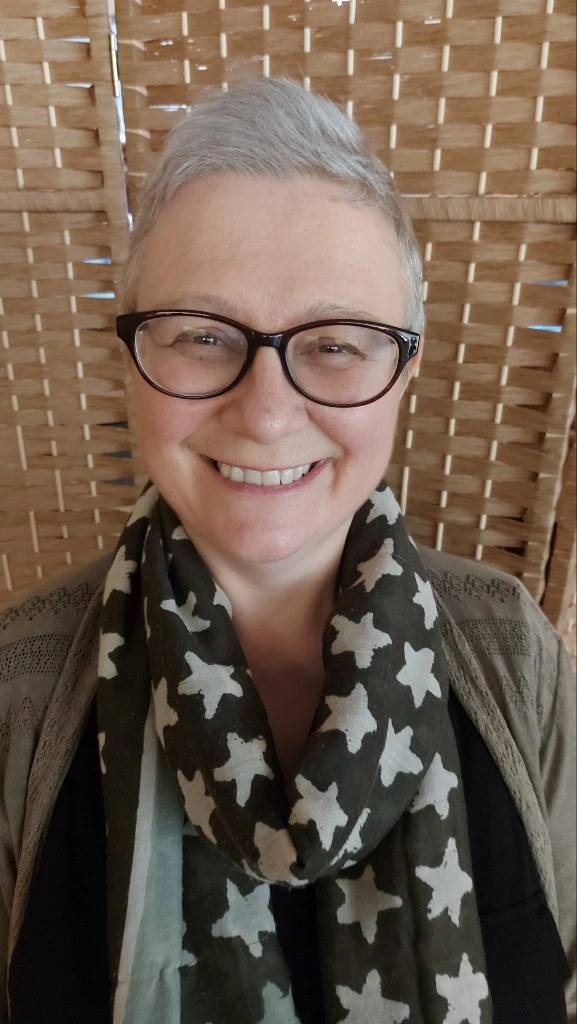
My name is Alison and I am the developmental editor of best-selling and award-winning fiction and non-fiction. I specialise in memoir, romance, relationship-based fiction (often called women’s fiction), self-help, and business. I am trained through the Publishing Training Centre and the Chartered Institute of Editing and Proofreading.
Find out more here alisongrayeditorialservices.com
Follow me on Substack Alison Gray | Substack
Connect on LinkedIn Alison Gray | LinkedIn